
Think together · Start with a story
A girl says, “three o’clock tomorrow,” and a robot turns the sound into text. When she checks the transcript, she notices that “three” might have been heard as “four.”
Break down the process
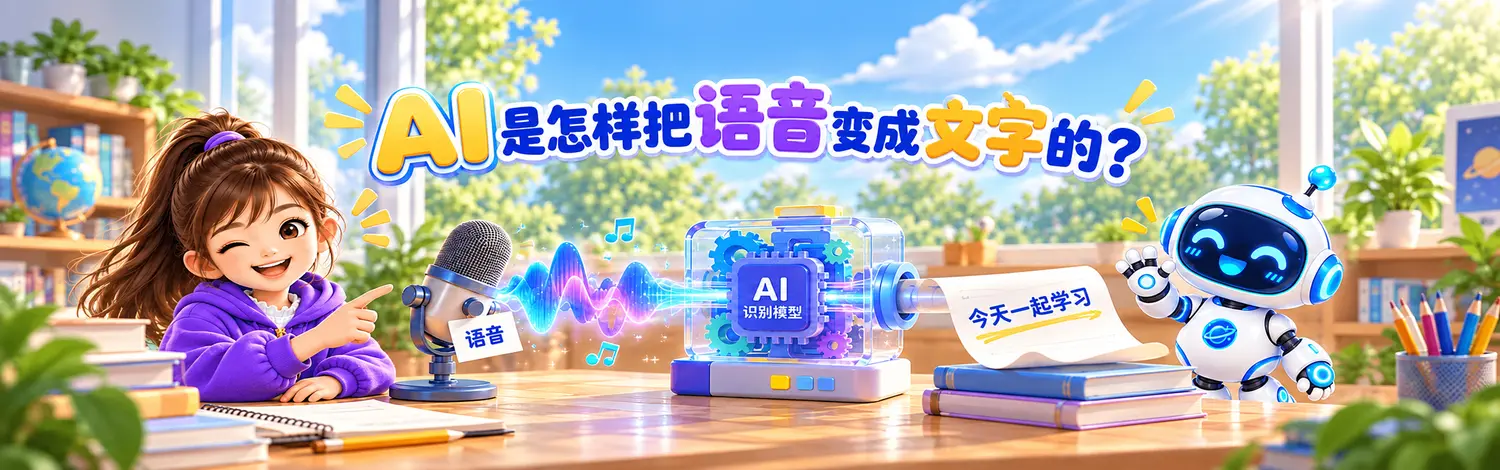
- Audio inputRecord speech
- RecognitionEstimate a word sequence
- Text outputCreate a transcript
- Human reviewCheck numbers and names
Speech recognition uses a model to map audio to text.
A system may combine sound clues and language patterns, but can still make mistakes with homophones, names, or noise.
Replay important details such as times, amounts, and names. Punctuation may also be added by the model from context.
Your turn to try
If “three o’clock” becomes “four o’clock,” is that just a harmless typo?
Ready? Open to see the explanation
No. The meaning and the plan both change. Important fields such as numbers deserve special review.
One idea to remember
Speech recognition uses a model to map audio to text.
Try covering the picture above and explaining each step to your family. If one step is hard to explain, revisit that card.