

Think together · Start with a story
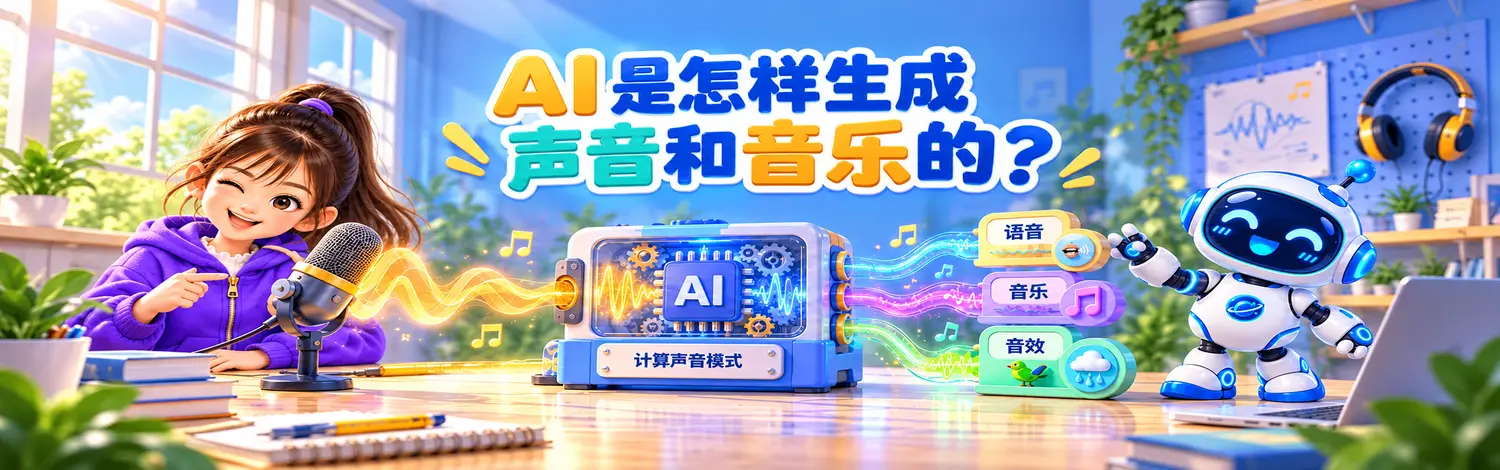
A girl gives a robot a rhythm and a scene, hoping it will make rainy-day music. The input does not have to be text; it can include audio too.
Break down the process
- ConditionsStyle or melody prompt
- GenerationCalculate an audio representation
- ReconstructionMake playable sound
- ListenCheck the content and use
Audio-generation models can create speech, music, or other sounds, depending on their training tasks.
Listen to generated audio and check whether it meets the request or contains anything unwanted.
Imitating a real person's voice also raises questions of consent and identity deception. For practice, use an original character or material you have permission to use.
Your turn to try
Could you send a generated announcement in the principal's voice saying school is closed as a real notice?
Ready? Open to see the explanation
No. Do not impersonate a real announcement. Label creative work clearly, and get appropriate permission before using a real person's voice.
One idea to remember
Audio-generation models can create speech, music, or other sounds, depending on their training tasks.
Try covering the picture above and explaining each step to your family. If one step is hard to explain, revisit that card.