
Think Together · Start with a Short Story
The girl's phone can turn speech into text, and her photo app can search by what is in a picture. The robot asks her to notice: What goes in, and what comes out?
Lay Out the Process
- Speech inputTurn it into text
- Picture inputPredict what it shows
- Past choicesMake a recommendation
- Human judgmentDecide if the result is useful
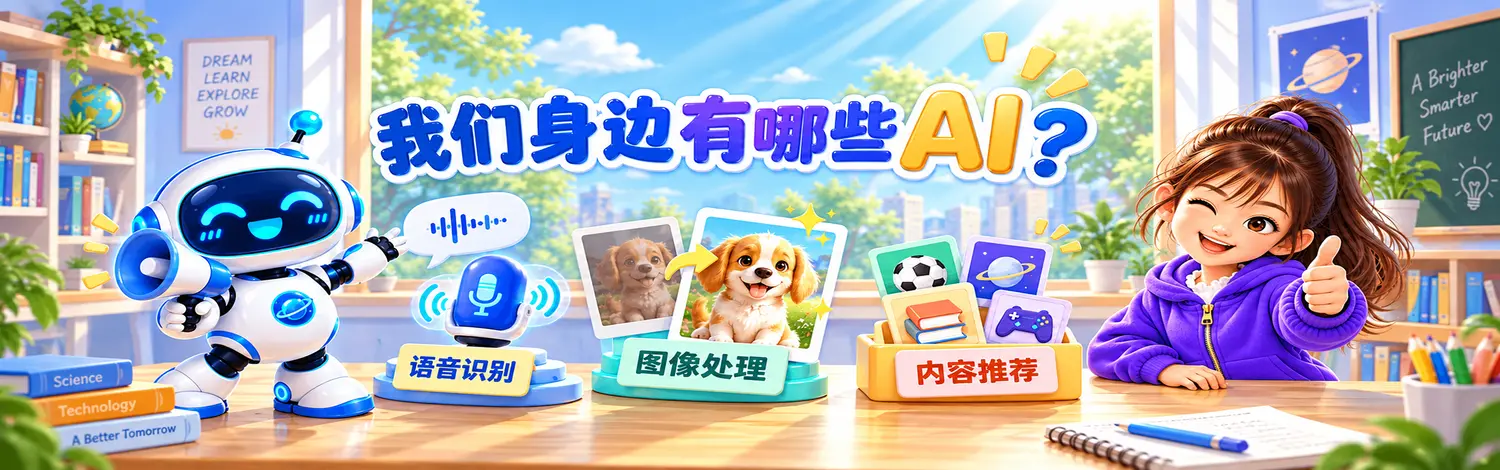
AI can appear in everyday features such as speech recognition, image processing, and recommendations.
These tasks are not all done by one kind of model or one fixed piece of magic. Each system has its own training goal, input conditions, and limits.
When using a feature, notice whether it makes mistakes in noisy places, with unfamiliar pictures, or in new situations. That helps you understand its limits.
Now You Try
If a photo app mistakes a rabbit for a cat, does that mean no AI feature can be used?
Ready? Open this to see the explanation
No. Consider the reliability and risks of that specific task. Check important results instead of judging every ability from one mistake.
One Idea to Take Away
AI can appear in everyday features such as speech recognition, image processing, and recommendations.
Try covering the diagram above and explaining each step to someone in your family. If one step is hard to explain, return to that card and look again.