

01Computers Look Very Smart
Today's computers can play chess, draw pictures, write articles, translate languages, and even chat with us. They seem really smart,
but are they actually "thinking"?
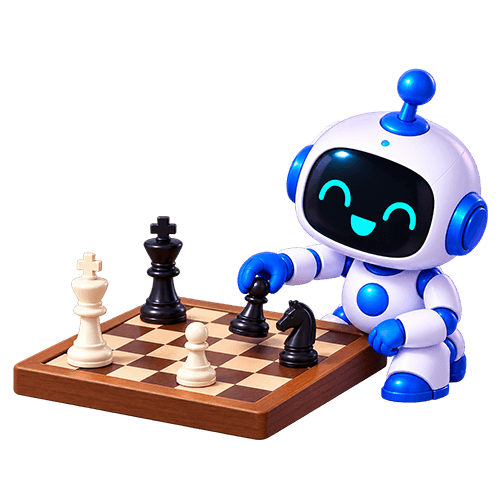
Play Chess
Can defeat many
human players

Draw Pictures
Can generate beautiful
images from text

Write Articles
Can generate stories, essays,
news content and more

Chat
Can answer questions
and converse with you
02How Do Computers Work?
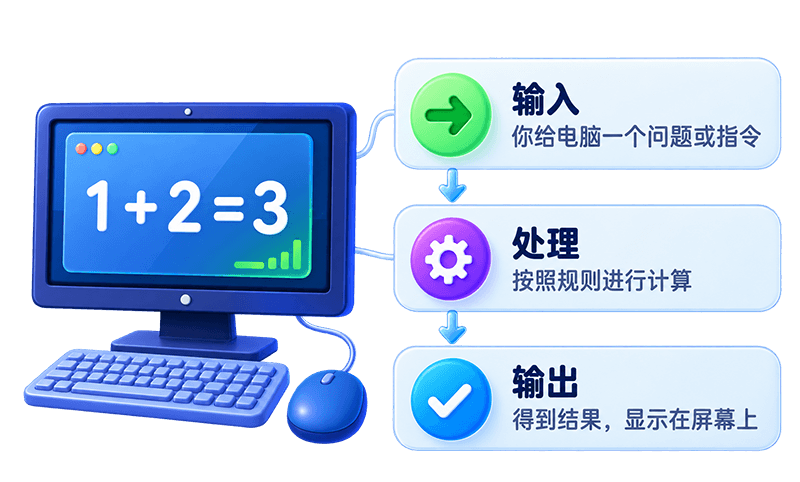
Computers don't actually think like humans do. Their way of working is more like:
Receive instructions → Calculate according to rules → Get results.
a very fast
calculator!

03So Can Computers Really Think?
"Appearing very smart" doesn't mean thinking like humans. Computers find suitable answers through extensive calculations and data;
this doesn't mean they have human-like feelings, thoughts, and consciousness.
What Computers Are Good At
- Fast calculations
- Remembering large amounts of information
- Completing tasks according to rules
- Performing very well in specific fields
calculating!

Not Like Humans
- Having feelings (happy, sad)
- Having their own ideas
- Truly understanding the meaning of the world
- Having human creativity and values
emotions too?

04AI Makes Computers Smarter
Today's Artificial Intelligence (AI) can find patterns by learning from large amounts of data, thus completing many tasks that were previously impossible.
But it still works according to algorithms and data, not conscious thinking like humans.
AI is amazing,but it's still a tool,
not a person!
Summary
Computers don't think like humans, but they can accomplish many amazing tasks through calculation and data. Understanding how they work helps us use them better and even create more powerful tools!